
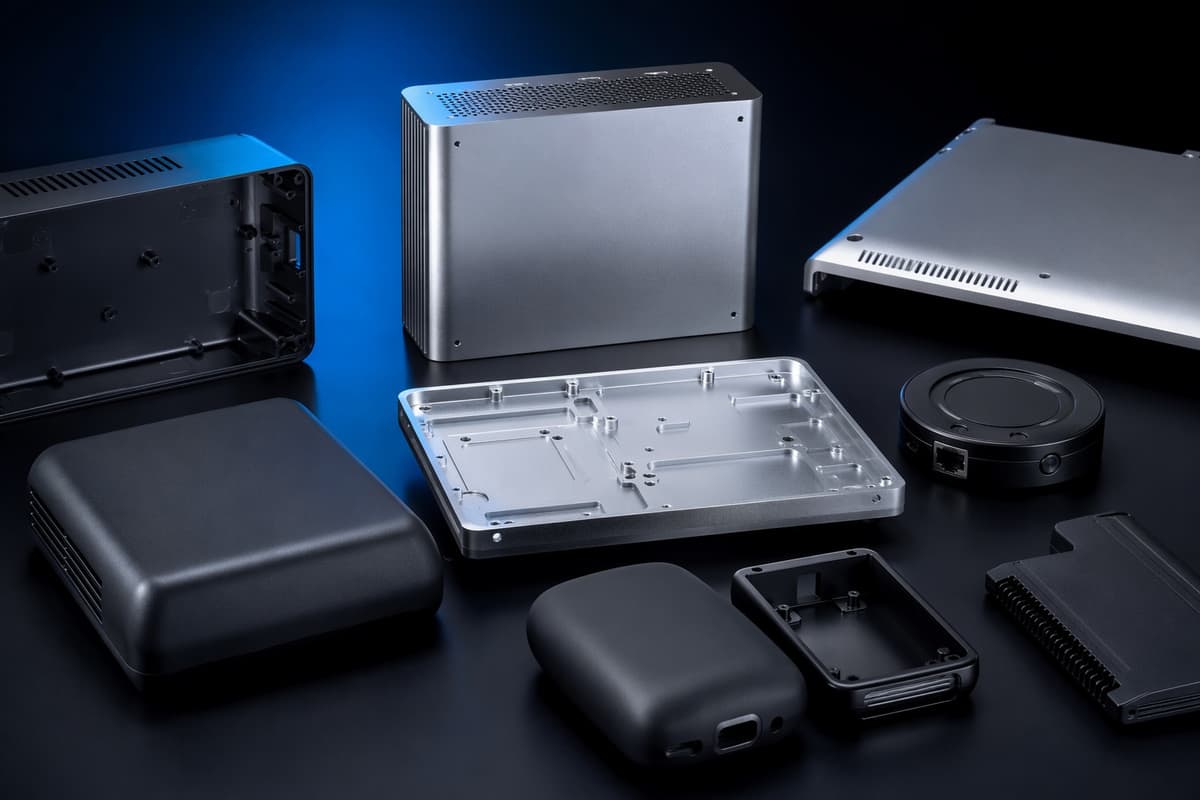
Electronics enclosures for instruments, IoT devices and industrial controls are typically made by CNC aluminum or plastic injection molding, sometimes with die-cast bases. OEM buyers must align EMI, heat, IP rating and cosmetics with process choice early.
Electronics enclosures for instruments, IoT devices and industrial controls are typically made by CNC aluminum or plastic injection molding, sometimes with die-cast bases. OEM buyers must align EMI, heat, IP rating and cosmetics with process choice early.
Process selection for enclosures
- CNC aluminum: low volume, excellent EMI/heat options, anodized cosmetics.
- Injection molded plastics: volume cost, textures, snap fits, light weight.
- Die cast: complex metal shapes at volume with secondary machine.
| Requirement | Often favors |
|---|---|
| MOQ 1–50 | CNC |
| Annual 10k+ plastic | Injection mold |
| Heat sink integral | Aluminum CNC or cast |
| Brand texture + logos | Molded plastic |
| Rapid design iterates | CNC / additive first |
Design and RFQ essentials
- PCB keep-outs, standoff heights and screw bosses.
- Connector cutouts and tolerance stacks.
- IP gasket grooves and compression notes.
- Cosmetic A-faces, logos, windows for displays.
- Regulatory marks and UL material needs if applicable (buyer-specified).
Assembly considerations
Plan ultrasonic welding, inserts, EMI gaskets and cable glands in the BOM. Sub-assembly at the OEM factory can reduce incoming inspection steps at your plant.
HC-Mold for enclosure programs
HC-Mold manufactures CNC parts, molds and molded housings in Dongguan for electronics-oriented OEM buyers under ISO 9001:2015. Free DFM; reply ≤12h; quote ≤24h on complete RFQs. contact@hc-mold.cn · +86-769-85327002.
Regulatory, labeling and supply continuity
Electronics enclosures often carry regulatory marks, serial windows and light-pipe features. Freezing artwork locations before texturing prevents expensive steel rework. If UL or other material listings are required, the buyer must specify approved resin lists—factories should not invent compliance claims.
Plan spare cavity inserts for high-wear gates on abrasive filled plastics used in industrial housings. Dual-source critical resins when possible. Packaging should protect painted or anodized faces in parcel and ocean modes.
Lifecycle programs benefit from keeping CAD, mold and molding history in one OEM archive. HC-Mold can maintain that continuity for enclosure families that spin multiple SKUs from shared platforms.
Buyer checklist before you issue the PO
Confirm drawings are revision-controlled, materials are purchasable in China within your schedule, and inspection methods are agreed in writing. Ambiguity at PO stage becomes cost later. List secondary operations, packaging and labeling so they are not treated as free extras. If multiple factories are bidding, freeze the same specification package for all—do not let informal calls create hidden scope differences.
Align internal stakeholders: industrial design owns cosmetics, engineering owns function, procurement owns total cost and risk. A single RFQ owner should consolidate feedback so the manufacturer receives one voice. For export programs, involve logistics early on Incoterms preference and whether tools or finished goods will cross borders.
electronics enclosure CNC molding OEM decisions improve when data is complete. HC-Mold International Co., Limited in Chang'an, Dongguan, Guangdong, China operates under ISO 9001:2015 with free DFM on complete packages, reply within 12 hours, and quote within 24 hours when files, material, volume and finish are clear. Email contact@hc-mold.cn or call +86-769-85327002. Prototype CNC frequently supports MOQ of one piece when geometry is defined.
Documentation to keep in your program folder
- Final quote with assumptions listed line by line.
- NDA and tooling ownership clauses if molds are involved.
- Approved DFM screenshots and CAD revision that matches the PO.
- Sample reports (dimensional and visual) with clear accept/reject notes.
- Packaging photos and carton specs for repeat orders.
FAQ
Can one factory do aluminum and plastic versions?
Yes—useful when you pilot metal then move to plastic for cost, or dual-source materials by SKU.
How do I handle EMI?
Metal enclosures, coatings, or conductive plastics/gaskets—specify test requirements early.
Prototype first?
Recommended. CNC or SLS/MJF for fit, then tool for volume plastics.
What files start enclosure quotes?
STEP assemblies or parts, critical 2D, material, finish, volume and IP/EMI notes.
Ready to source electronics enclosures? Send your STEP/IGES drawings, material notes, volume band and finish requirements via our RFQ form. HC-Mold International Co., Limited is a direct OEM manufacturer in Chang'an, Dongguan, Guangdong, China (ISO 9001:2015). Contact: contact@hc-mold.cn · +86-769-85327002. Free DFM review; reply ≤12h and quote ≤24h on complete RFQ packages.
Talk to HC-Mold engineering
Free DFM · reply ≤12h · quote ≤24h on complete RFQ · ISO 9001:2015 · Dongguan, China