
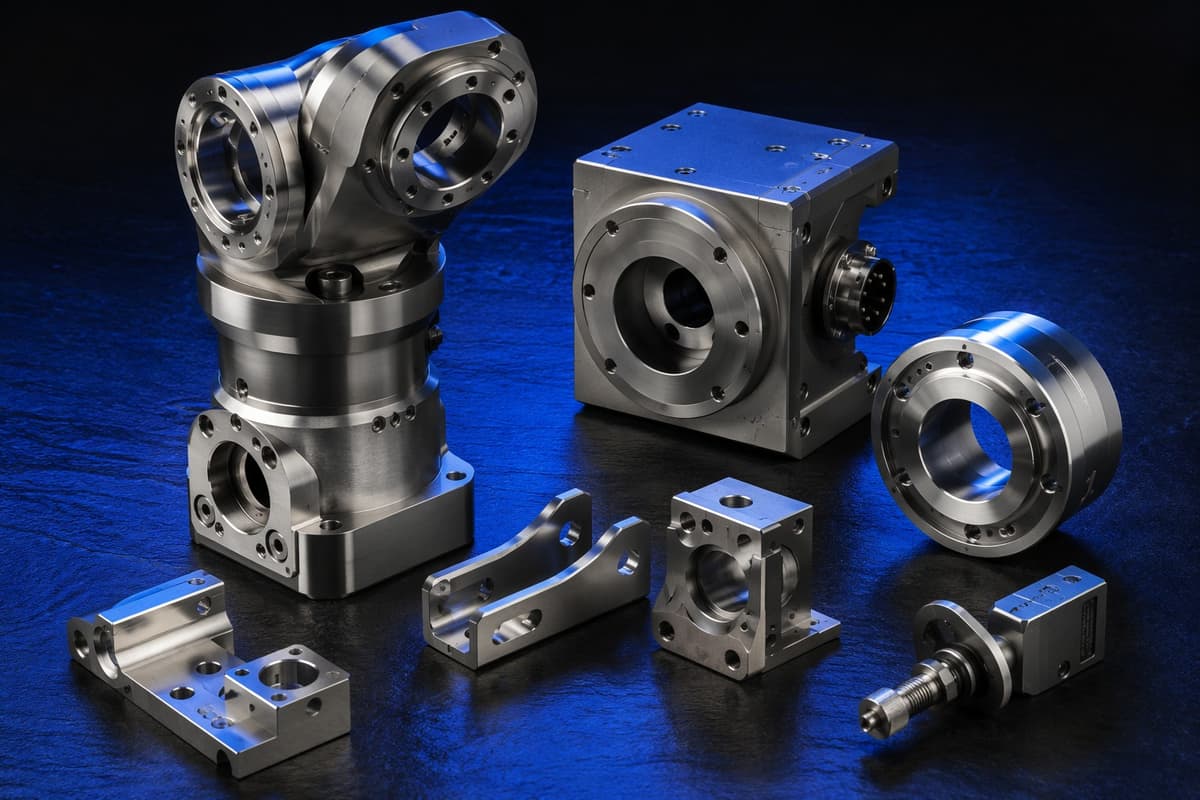
The resin sets the shrinkage, the strength, the heat limit, the finish and a large part of the cost. Choose it early, because it drives mold design, steel choice and tolerance.
The resin sets the shrinkage, the strength, the heat limit, the finish and a large part of the cost. Choose it early, because it drives mold design, steel choice and tolerance.
Quick answer
Start from the use, not the resin name. List the mechanical load, temperature, chemicals, UV exposure, appearance, regulatory needs and target price. Then shortlist: ABS for general housings, PC or PC/ABS for strength and heat, PP for chemical resistance and living hinges, PA (nylon) for wear and strength, POM for low-friction gears and precision parts, PBT for electrical parts, and PMMA for clarity. The data below is typical and general. Check the supplier datasheet for the exact grade.
Key takeaways
- Shrinkage differs by resin and fill, and it changes tolerance and warpage.
- Glass-filled grades increase stiffness but cause warpage and tool wear.
- Moisture-sensitive resins such as PA, PC and PBT must be dried before molding.
- Ask for RoHS and other documentation early if your market needs it.
Common resins at a glance
| Resin | Strengths | Limits | Typical uses | Typical shrinkage* |
|---|---|---|---|---|
| ABS | Easy to mold, good surface, impact toughness | Lower heat and chemical resistance | Housings, consumer products | About 0.4 to 0.7% |
| PC | Strong, tough, good heat resistance, can be clear | Notch sensitive, needs drying, stress cracking with some chemicals | Covers, lenses, structural parts | About 0.5 to 0.7% |
| PC/ABS | Balance of PC strength and ABS processability | Cost, grade-dependent | Electronic housings | About 0.5 to 0.7% |
| PP | Chemical resistance, low cost, living hinges | Higher shrinkage, lower stiffness, hard to paint or bond | Containers, hinges, automotive interiors | About 1.0 to 2.0% |
| PA6 / PA66 | Strong, wear resistant, good heat, often glass-filled | Absorbs moisture, dimensions change | Gears, brackets, functional parts | About 0.7 to 2.0%, depends on fill |
| POM | Low friction, stiff, dimensionally stable | Hard to bond, sensitive to some acids | Gears, bearings, precision parts | About 1.8 to 2.5% |
| PBT | Electrical properties, heat resistance, chemical resistance | Warps if unfilled, glass-filled common | Connectors, electrical housings | About 1.2 to 2.0%, depends on fill |
| PMMA | Optical clarity, scratch resistance | Brittle | Lenses, light guides | About 0.3 to 0.6% |
*Typical ranges for general guidance only. Real shrinkage depends on grade, fill, wall thickness and process. Use datasheet values for design.
How to choose, step by step
- Define the requirements: load, impact, temperature range, chemicals, UV, flame rating, food or skin contact, appearance and color.
- Define the constraints: budget, volume, tolerance and the target market's regulations.
- Shortlist two or three resins and compare datasheets, not marketing names.
- Check processability: shrinkage, flow length, drying needs and gate sensitivity.
- Test with samples from a prototype or rapid tool before locking the production resin.
Decision rules
- Need a good-looking housing at low cost: ABS, or PC/ABS if heat or strength is higher.
- Need a transparent part: PC for toughness, PMMA for clarity and scratch resistance.
- Need chemical resistance or a living hinge: PP.
- Need strength and wear resistance: PA, often glass-filled, and plan for moisture.
- Need precision and low friction: POM.
- Need electrical insulation and heat: PBT or glass-filled PA.
Fillers and additives
| Additive | Effect | Watch for |
|---|---|---|
| Glass fiber | Higher stiffness and heat deflection | Anisotropic shrinkage and warpage, surface finish, faster tool wear |
| Flame retardants | Meet flame ratings | Possible mechanical loss, regulatory review |
| UV stabilizers | Outdoor durability | Cost and color effects |
| Colorants | Appearance | Color matching and batch consistency |
| Regrind | Lower material cost | Property loss, limits in regulated or cosmetic parts |
Abrasive fillers, such as glass fiber, favor hardened tool steel. See mold steel choices.
Worked example (illustrative, not a customer project)
An outdoor sensor enclosure needs impact toughness, UV resistance, a flame rating and a good-looking surface. A sensible path: shortlist a UV-stabilized, flame-retardant PC/ABS and a UV-stabilized PC or ASA grade, compare datasheets for impact, heat deflection and flame rating, mold samples of both, expose them to your own tests and choose on results and price. Record the final grade name and supplier.
Validate before you lock the resin
- Sample parts molded in the intended resin and color
- Fit, assembly and snap-fit checks
- Heat, impact, chemical and UV tests relevant to the use
- Dimensional check after cooling, and after conditioning for moisture-sensitive resins
- Documentation for your market, such as RoHS statements
How resin affects the mold and the price
Resin drives shrinkage allowance in the tool, venting, gate design, cooling and cycle time, and these affect tooling cost and part cost. Read how mold cost is built up and hot runner vs cold runner, because some resins and colors suit one more than the other.
Compliance and documents
Many buyers need RoHS or other documentation. HC-Mold can provide RoHS and CE documentation on request, and the exact documents depend on your resin and product. State your market early so the right grade is quoted. Use the DFM checklist and read common molding defects to see how resin choice affects them.
What to send for a material recommendation
Part model and drawing, operating temperature range, chemical or UV exposure, appearance and color, regulatory requirements, annual volume and target cost. Injection molding at HC-Mold starts from 500 pcs: see MOQ by process. Free DFM review, mold-flow analysis and T0 trial and modification are included in the mold project.
FAQ
Which plastic is best for a general consumer housing?
ABS is a common starting point for appearance and cost. PC/ABS is used when more heat or strength is needed.
Why do some resins need drying?
PA, PC and PBT absorb moisture, which causes splay and weak parts when molded wet. Dry them per the datasheet.
Does glass fiber help or hurt?
It raises stiffness and heat resistance, but increases warpage risk and tool wear. It often needs hardened steel.
Can HC-Mold supply RoHS documents?
RoHS and CE documentation is available on request. The exact documents depend on the resin and the product.
How do I choose between PP and PA?
PP suits chemical resistance, living hinges and low cost. PA suits strength and wear, but absorbs moisture and changes dimensions.
Not sure which resin fits?
Send your part, its operating conditions and your target market. Engineers recommend two or three resin options under NDA. We reply within 12 hours.
Talk to HC-Mold engineering
Free DFM · reply ≤12h · quote ≤24h on complete RFQ · ISO 9001:2015 · Dongguan, China