
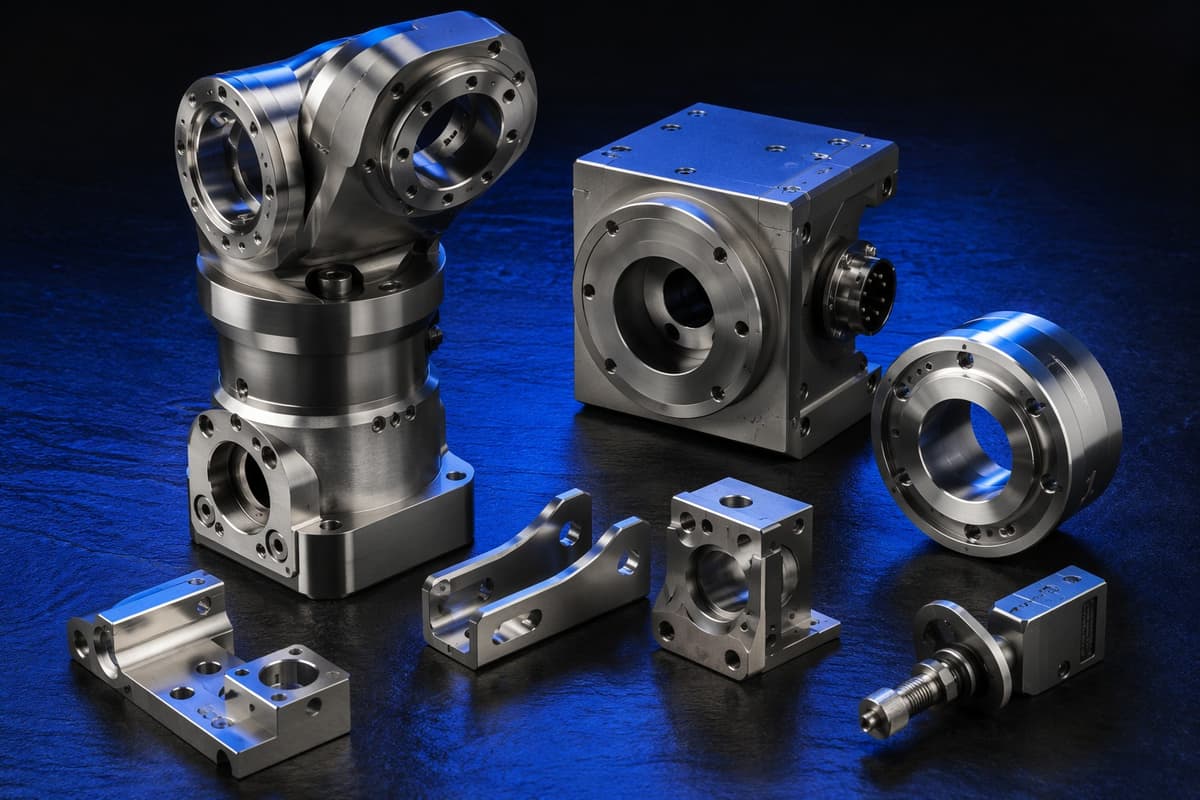
P20 and H13 are two common mold steels buyers see on China tooling quotes. Choosing correctly balances tool life, polishability, cycle aggressiveness and budget. There is no universal “best”—only fit for resin, volume and geometry.
P20 and H13 are two common mold steels buyers see on China tooling quotes. Choosing correctly balances tool life, polishability, cycle aggressiveness and budget. There is no universal “best”—only fit for resin, volume and geometry.
Quick comparison
| Property | P20 (prehardened) | H13 (hot work) |
|---|---|---|
| Delivery state | Often ~28–34 HRC prehard | Annealed then heat treated |
| Typical use | Medium life cavities/cores | Higher wear, inserts, hot work |
| Polish | Good for many cosmetics | Excellent when properly treated |
| Cost | Generally lower tool cost | Higher material & HT cost |
| Life band | Common mid-volume tools | Longer life / abrasive fills |
When P20 is a rational default
- Commodity resins without heavy glass fill.
- Moderate annual volumes where tool cost must stay lean.
- Larger molds where prehard simplifies machining.
When H13 (or higher) is justified
- Glass-filled or abrasive compounds.
- High shot counts and tight wear allowances on gates.
- Inserts that need higher hardness after heat treatment.
- Certain high-temperature or demanding textures.
Other steels you may see
NAK80 for high polish optics-like surfaces; stainless grades for corrosive resins (PVC, flame retardant systems); S136-type for corrosion + polish. Align steel with resin chemistry and cosmetic class.
RFQ guidance
Either specify life target (e.g. 500k shots) and let the toolmaker propose steel, or lock corporate steel standards. Request certificates on critical inserts. HC-Mold engineers can recommend grades during free DFM under ISO 9001:2015 practices.
Surface finish, corrosion and total tool cost
Polish class and texture depth interact with steel choice. High-gloss optical-like surfaces often prefer steels designed for polishability; deep textures may hide minor wear that would show on SPI A finishes. Corrosive resins and humid storage without proper protection attack cavities—stainless or plated solutions may outrank a cheap P20 decision.
Heat treatment distortion on H13 inserts must be reserved for in machining stock. Communicate insert strategy early so electrodes and CNC programs account for post-HT grind. Certificates should follow heat lot numbers for traceability on long-life automotive-adjacent tools even when full IATF is not claimed.
Total cost of ownership includes polishing rework, insert replacement and downtime—not only billet price. HC-Mold quotations can present steel options against stated life targets so finance and engineering choose deliberately.
Buyer checklist before you issue the PO
Confirm drawings are revision-controlled, materials are purchasable in China within your schedule, and inspection methods are agreed in writing. Ambiguity at PO stage becomes cost later. List secondary operations, packaging and labeling so they are not treated as free extras. If multiple factories are bidding, freeze the same specification package for all—do not let informal calls create hidden scope differences.
Align internal stakeholders: industrial design owns cosmetics, engineering owns function, procurement owns total cost and risk. A single RFQ owner should consolidate feedback so the manufacturer receives one voice. For export programs, involve logistics early on Incoterms preference and whether tools or finished goods will cross borders.
P20 vs H13 mold steel decisions improve when data is complete. HC-Mold International Co., Limited in Chang'an, Dongguan, Guangdong, China operates under ISO 9001:2015 with free DFM on complete packages, reply within 12 hours, and quote within 24 hours when files, material, volume and finish are clear. Email contact@hc-mold.cn or call +86-769-85327002. Prototype CNC frequently supports MOQ of one piece when geometry is defined.
Documentation to keep in your program folder
- Final quote with assumptions listed line by line.
- NDA and tooling ownership clauses if molds are involved.
- Approved DFM screenshots and CAD revision that matches the PO.
- Sample reports (dimensional and visual) with clear accept/reject notes.
- Packaging photos and carton specs for repeat orders.
FAQ
Can I mix P20 plates with H13 inserts?
Yes—common approach: prehard plates with harder cavity/core inserts at wear points.
Does harder steel always last longer?
Hardness helps wear but toughness and cooling design also drive life. Over-hard brittle edges can chip.
Is 718 the same as P20?
718-type steels are related prehard families; confirm exact grade on the quote BOM.
Who can advise on my resin?
Send resin datasheet with RFQ to contact@hc-mold.cn for steel suggestions.
Ready to source tooling with the right mold steel? Send your STEP/IGES drawings, material notes, volume band and finish requirements via our RFQ form. HC-Mold International Co., Limited is a direct OEM manufacturer in Chang'an, Dongguan, Guangdong, China (ISO 9001:2015). Contact: contact@hc-mold.cn · +86-769-85327002. Free DFM review; reply ≤12h and quote ≤24h on complete RFQ packages.
Talk to HC-Mold engineering
Free DFM · reply ≤12h · quote ≤24h on complete RFQ · ISO 9001:2015 · Dongguan, China